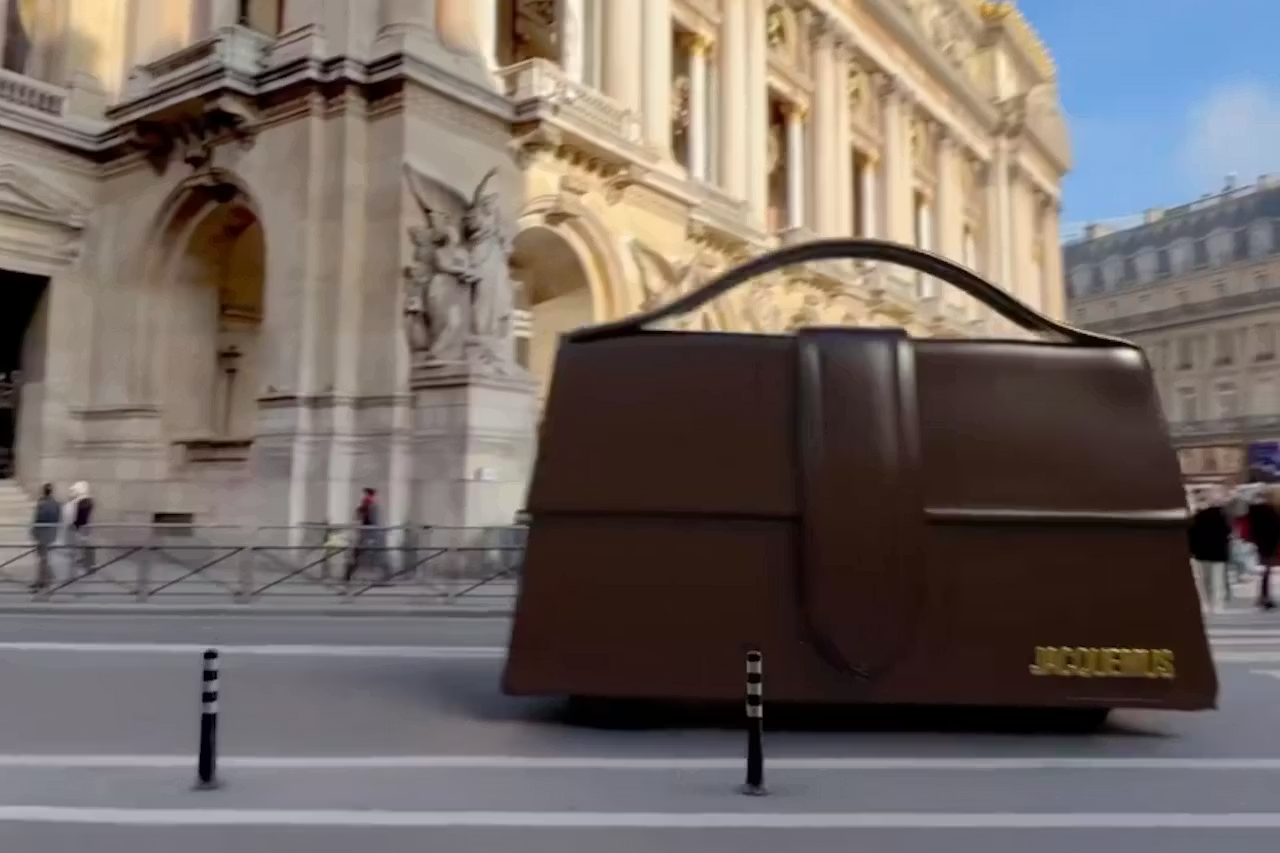
Once upon a time, marketing was about clever taglines, witty copy, and the art of persuasion through words. Entire campaigns lived and died on the strength of a single phrase: “Just Do It,” “Think Different,” “Got Milk?”
But the landscape has shifted. The noise is deafening. Our feeds are saturated with text and copy, every brand begging for attention that get lost in one another. A “catchy” slogan isn’t cutting through anymore, it needs to go beyond and show the brand inside and out, to tell the story. How do you do that? Through vibes.
In 2025, the brands that win aren’t the ones saying the most. They’re the ones making us FEEL the most and immersive visuals are the key to it.

long live the vibe
Here’s the truth: nobody actually buys what you’re selling. They buy the version of themselves they imagine they’ll become once they have it.
This is why visuals matter more than messaging. Words try to explain. Visuals skip the explanation and hit the emotional core.
To tap into it, we need to rethink how we class our target audience. Instead of age, gender and job, it should be about archetypes and emotional profile. The Lover doesn’t want “a new perfume”, they want a way to romanticize their life (Coco Chanel explains it the best). The Rebel doesn’t want “a motorcycle”, they want danger, chaos, and freedom that tell them they are on the marge of society. The Visionary doesn’t want “a laptop”, they want a portal into the future where they’re already one step ahead.
If your brand makes people feel like that version of themselves, you’ve already won.
pictures don’t just speak, they show
There’s a reason for the saying “a picture is worth a thousand words”. Words can be misinterpreted, overanalyzed, or simply ignored. Images, on the other hand, bypass rationality. They can express abstract feelings and all the nuances that word can’t grasp, especially not in an era that has so little time to keep the attention.
A campaign can tell me “this watch makes me successful.” But show me a moody black-and-white shot of someone standing on a rooftop at midnight, city lights glowing below, and suddenly we are imagining ourselves there. We feel the success, the solitude, the quiet power. That’s not copywriting. That’s projection.
And projection sells better than explanation.
from ads to cinema
This shift fundamentally changes how brands create content. The bar is no longer “a nice ad” or “a good post.” The new standard is cinematic storytelling.
Marketing has become filmmaking. Every frame, every shot, every filter isn’t just decoration, it’s identity-shaping. Brands must master showing instead of telling.
That doesn’t just apply to Instagram grids or TikTok edits. The best brands now craft entire experiences. Pop-ups, events, installations, collaborations… They go in the real world to light these emotions in their customers.
The goal isn’t to say, “look at us.” The goal is to build a universe that customers want to step into. When someone posts about your event or shares your video, they’re not amplifying your brand; they’re curating their identity through your vibe.

vibe marketing
This cultural pivot is so strong it has a name now: Vibe Marketing.
Generative tools can spin out infinite visual worlds, each one fine-tuned to a vibe. A single campaign can now live in dozens of aesthetic universes, targeted not to who you are, but to who you want to be.
Vibe Marketing isn’t just a trend. It’s becoming a discipline. A whole new branch of brand-building focused not on demographics, not on psychographics, but on aesthetic resonance.
brands that get It
You’ve already seen it in the wild.These brands aren’t pitching what they make. They’re inviting you into worlds they’ve created.
Glossier

Glossier built a billion-dollar beauty brand on soft pink visuals, glossy textures, and the aesthetic of effortless femininity. They didn’t just sell products—they sold a way of seeing yourself in the mirror.
balenciaga

Balenciaga went the opposite way, creating a universe of dystopian absurdity. Their campaigns often look more like apocalyptic art projects than fashion ads, but that’s the point. You’re not just buying clothes—you’re buying into satire, critique, and chaos.
apple

Apple stopped selling hardware years ago. They sell “the future.” Every ad, every keynote, every product launch is designed to make you feel like stepping into tomorrow. The product is secondary. The vibe is primary.
the psychology of vibes
Why does this work so well? Because humans are wired for story, image, and emotion.
Cognitive science shows that we process visuals 60,000 times faster than text. Our brains are designed to respond to imagery because survival once depended on it, reading the body language of predators, noticing a storm on the horizon, or recognizing signals from other humans.
Even today, the emotional brain (the limbic system) reacts to imagery before the rational brain has time to “think.” That’s why vibes are so effective: they hit us before logic can get in the way.
When you build your brand on vibes, you’re speaking the brain’s native language.

marketing ≠ marketing anymore
The implications stretch beyond campaigns. When your brand is a vibe, you’re not just marketing, you’re participating in culture.
Music festivals, fashion weeks, memes, niche internet aesthetics… They all thrive on vibe-first engagement. A well-timed drop or a perfectly executed visual doesn’t just sell, it becomes part of cultural conversation.
That’s the ultimate level-up: when your brand stops being content and starts being culture.
so, what’s the vibe?
The brands that thrive in 2025 will be the ones fluent in vibe. They’ll understand that customers don’t buy products, they buy moods, aesthetics, and universes they want to step into.
Words can explain that. But visuals make you feel it. Feelings are what drive action.