

Luxury has long been synonymous with time.
With heritage. With institutions. With the slow accumulation of legitimacy earned over decades, sometimes centuries. Most luxury houses have carefully crafted their authority through history, scarcity, and an almost ritualistic relationship to the past. Their narratives are adjusted cautiously, tweaked at the margins to remain relevant without ever disturbing the foundation.
This model makes luxury feel almost inaccessible to newcomers. When the industry is dominated by names like Gucci, Chanel, or Hermès, the door appears firmly closed, guarded by legacy, lineage, and an unspoken requirement of age.
And yet, over the past decade, a relatively young brand has managed to do what many thought impossible: enter the luxury conversation without a centuries-old résumé. Not quietly. Not politely. But loudly, visually, and everywhere.
Jacquemus did not inherit legitimacy.
It built relevance first and allowed status to follow.
an unorthodox path into luxury
Founded in 2009 by Simon Porte Jacquemus, the brand emerged far from the traditional corridors of luxury power. The man behind the brand and now iconic visuals was 19 years old, had dropped out of fashion school, and was operating without the backing of a major institution. The Paris fashion system at the time was still largely dominated by historic houses and entrenched networks.
Rather than trying to compete on craftsmanship alone or mimic the codes of established luxury, Jacquemus leaned into what he had: a point of view, an instinct for image, and a deeply personal story rooted in the South of France that he shared on social media.
From the beginning, Jacquemus was less about imposing distance and more about creating intimacy. The brand grew not as an abstract house, but as an extension of its founder’s world: his memories, his grief, his humor, his sense of place. In many ways, the first product wasn’t a handbag or a dress, but him.
luxury that speaks the language of its time
Where traditional luxury houses were slow to embrace digital platforms, Jacquemus treated social media as its natural habitat. Instagram, in particular, became the brand’s primary canvas, not just a marketing channel, but a living, evolving expression of the brand’s identity.
During the first era of Jacquemus, the visual language was immediately recognizable: minimalist yet playful, sun-drenched yet surreal, carefully composed but never stiff. Posts felt personal, sometimes even naive, often humorous. The tone was warm, human, and self-aware.
A stark contrast to the seriousness and mystery that dominates much of luxury communication.
This wasn’t accidental. Jacquemus understood something many brands still struggle with: social media rewards emotion, not authority. It values presence over perfection, moments over monuments.
Everything Jacquemus created (even offline) was designed to live online.

instagram as a cultural amplifier
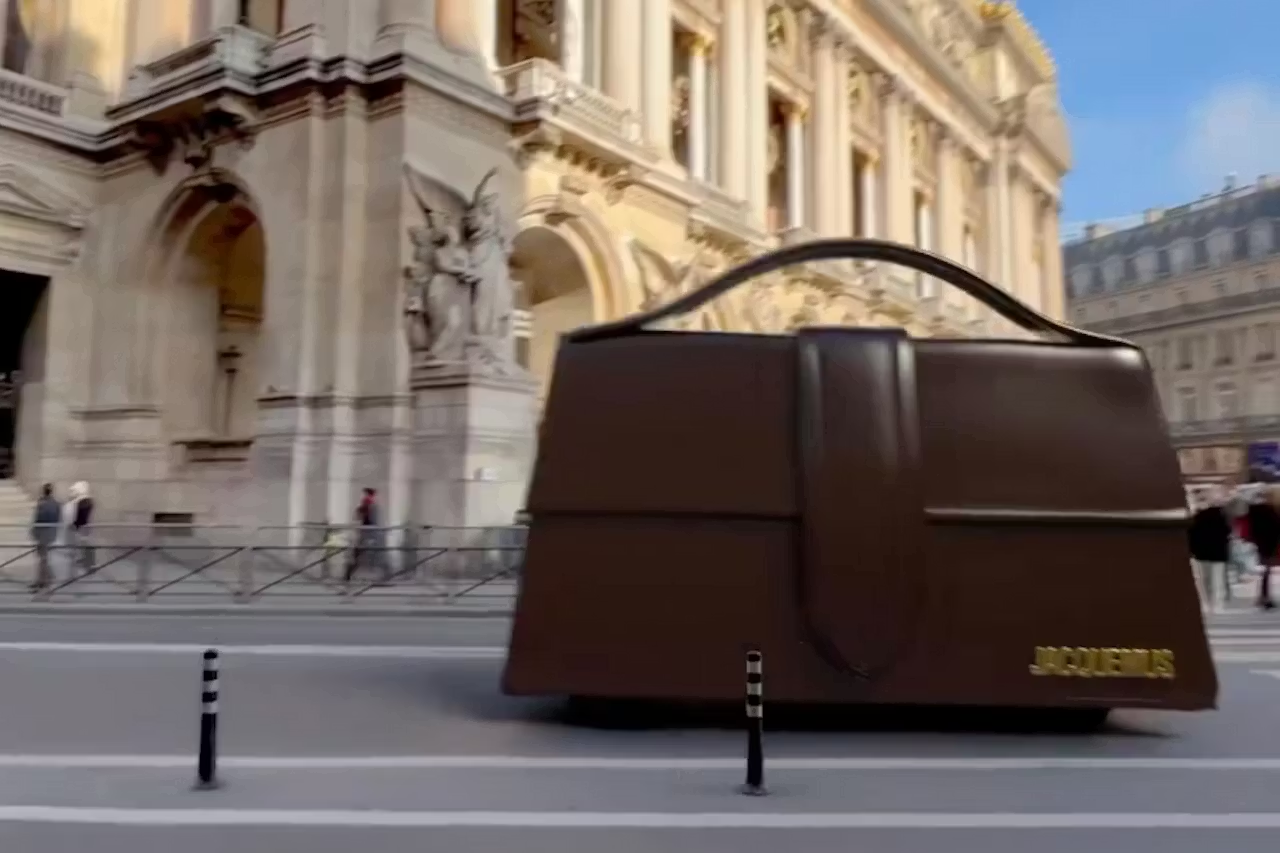
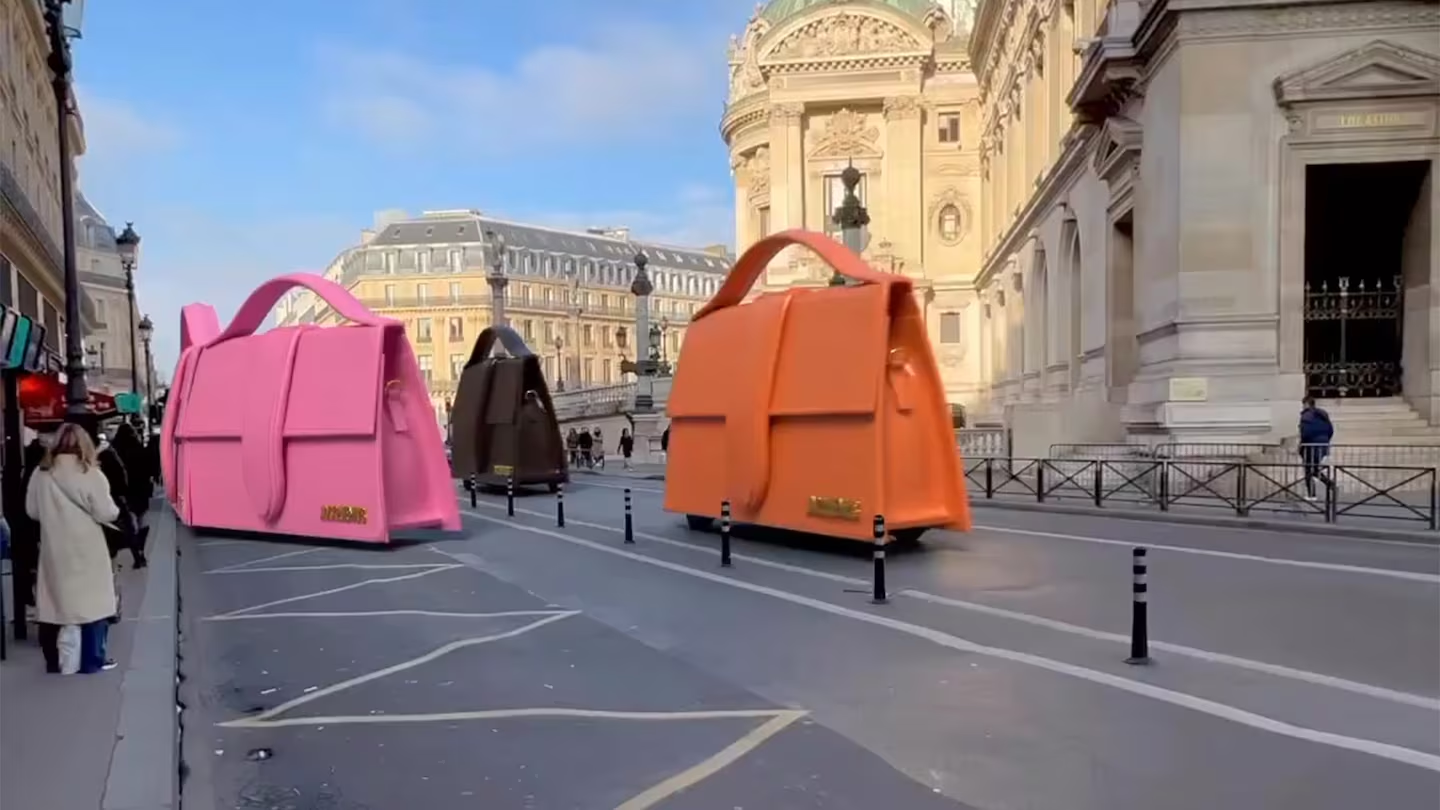
Jacquemus’ campaigns and shows often feel like performances designed for the feed. Guerilla fashion shows, absurdly small handbags, oversized hats bordering on parody, surreal installations appearing in everyday urban spaces, all of it engineered to surprise, delight, and spread.
The now-iconic Le Chiquito bag, reimagined as a giant sculpture placed in city streets, wasn’t just a product launch. It was a visual interruption of the ordinary. A moment made to be photographed, shared, discussed.
Even when Jacquemus stages physical experiences (you for sure have heard of the “Le coup de soleil” runway in lavender fields by now), the intention is clear: these moments are meant to be translated. The audience is both present and digital. The spectacle doesn’t end at the location; it begins there.
In this sense, Jacquemus mastered something crucial: virality without cynicism. The brand doesn’t chase trends. It creates images so distinct they become unavoidable.
selling a world, not a product
What truly sets Jacquemus apart is its commitment to storytelling over selling.
Many campaigns barely feature the product at all. Instead, they offer fragments of a world: a quiet morning, a table set with fruit and coffee, a sun-bleached coastline, a moment suspended in time. Sometimes the brand name is all that remains to associates with the quiet images of the south of France.
This approach transforms Jacquemus from an object into a place where you want to be.
The South of France aesthetic isn’t a theme; it’s a feeling. Nostalgia, warmth, ease, and escapism are woven into every visual decision through lemons, butter and yellow grass. We can feel the warmth of the sun and the dryness of the air simply by looking at it. Fashion becomes a vehicle for memory rather than aspiration alone.

accessibility without losing desire
Unlike many luxury houses whose core audience skews older and wealthier, Jacquemus speaks directly to younger generations. This is reflected not only in tone and imagery, but also in pricing. According to industry data, Jacquemus maintains one of the lowest price positions within luxury for both clothing and bags.
This doesn’t dilute the brand. It strengthens it.
Jacquemus strikes a delicate balance: exclusive enough to feel special, accessible enough to feel attainable. The result is aspiration without alienation, a critical distinction in a generation wary of elitism but still drawn to beauty and status.
Their is room for everybody in the world of Jacquemus.
cultural relevance over institutional authority
Where legacy houses often rely on their past to justify their presence, Jacquemus is firmly anchored in the present. It understands its era; the speed, the visuals, the appetite for joy, absurdity, and escapism. Mostly, it understands that we are tired of being told that we can’t sit at the table.
This cultural fluency has propelled the brand up industry rankings, at times outperforming far larger maisons in visibility and desirability. It proves a subtle but powerful point: cultural relevance is now a form of luxury capital.
Jacquemus didn’t wait for permission from the establishment. It built its own audience, its own mythology, and its own rules and the industry had no choice but to follow.

listening, evolving, staying human
As the brand has grown, Jacquemus has continued to cultivate a sense of closeness with its audience. Through direct engagement, user-generated content, and a willingness to adapt, the brand feels responsive rather than distant.
Sustainability has also become part of this conversation. Jacquemus has increasingly emphasized responsible practices, ethical sourcing, and reduced environmental impact, aligning its values with those of a younger, more conscious audience.
The message is clear: being modern isn’t just about aesthetics. It’s about accountability.
the real lesson jacquemus offers
Jacquemus exposes a vulnerability at the heart of traditional luxury.
If history is its greatest strength, then the present is often its weakest point.
By embracing its time instead of resisting it, Jacquemus slipped through a gap the industry didn’t realize it had left open. It didn’t attempt to out-heritage the heritage houses. It out-understood the moment.
In doing so, Jacquemus didn’t just become culturally relevant, it became rooted in culture itself.
And that may be the most durable form of luxury there is.


