Unless you’ve been living under a rock for the past two weeks, you’ve probably heard about Jaguar’s audacious rebrand. The British powerhouse, long synonymous with tradition, stability, and timelessness, has thrown caution to the wind with a bold new campaign urging us to “Delete ordinary” and “copy nothing.” Naturally, this has sent shockwaves through Jaguar’s conservative, established clientele, unleashing a tidal wave of backlash and hateful comments.
The ad, revealing a new logo and a whole new direction for the well establish brand clash completely with anything they have been donig precedently. Maybe it’s this harsh contrast, maybe it’s just stark close mindness, but most of the comments are negative. Not just negative; sometimes plain hateful towards the rebrand and the people featured in the ad.
The new 30 seconds Jaguar advertisement opens on a diverse group of models in vibrant, avant-garde clothing emerging from an elevator into an austere landscape, everything reminescing of the space-age aesthetic. Set to techno-industrial music, the models are shown in various artistic poses while phrases like “live vivid,” “delete ordinary,” and “copy nothing” flash across the screen. The video culminates with the models sitting on a rock in a pink desert setting. The ads will leave you wondering exactly what is Jaguar trying to sell, as the advertisement contains no cars, focusing instead on artistic expression and modern aesthetics.
The premise meant to tease us for the announce reveal of their first new all electric car on December 3rd definitely worked. Whether you like it or not, all eyes are now on Jaguar, half expecting them to fail, half curious about the car they promised to be as avant-garde as this new rebrand.
But here’s the thing: we’re absolutely loving Jaguar’s rebrand.
the end of an era?
Timelessness never failed the luxury market before, so why is there so much disruption in it lately (hello, Gucci)? Because the old market isn’t doing anything for them anymore and they are trying to reach younger generations. Indeed, Jaguar’s clientele hasn’t been delivering; sales have been declining for years as they struggle to keep their pace behind other luxury car powerhouse.
To survive is to adapt and so, Jaguar might seem like its turning its back on their previous customer in the search of a younger more varied audience. Out of this complete switch of target audience is born the new marketing strategy and rebranding of Jaguar, meant to appeal to people that want something very different. Their strategy tells us one thing: for the first time in history, exclusivity associated to luxury brand isn’t cutting it.
You know the world is changing when branding is changing. It’s meant to reflect the customers, to align with the values of the masses and reflect their desires. So if a brand goes from exclusivity to inclusivity to reach customers in the younger generation, it means that there are enough of us to force this change. Jaguar’s rebrand shows that rich people can be of all shapes, colors, and genders. Power is getting diversify- the world stopped revolving around one specific group.
We’d feel threatened too if we were rich white men.

old jaguar: capitalism's poster child.
For decades, Jaguar’s brand identity revolved around timeless elegance, British heritage, and exclusive luxury; a testament to an era dominated by capitalist ideals. The iconic leaping jaguar emblem, sleek typography, and a color palette dominated by deep greens, silvers, and golds epitomized sophistication and prestige, speaking directly to a demographic of affluent, often older white men. It was meant to be a symbol of achievement, of success and hard work. People that owned Jaguars were part of this small few that “made it” in the world; the epitome of the american dream on a night out, diamonds in the wind.
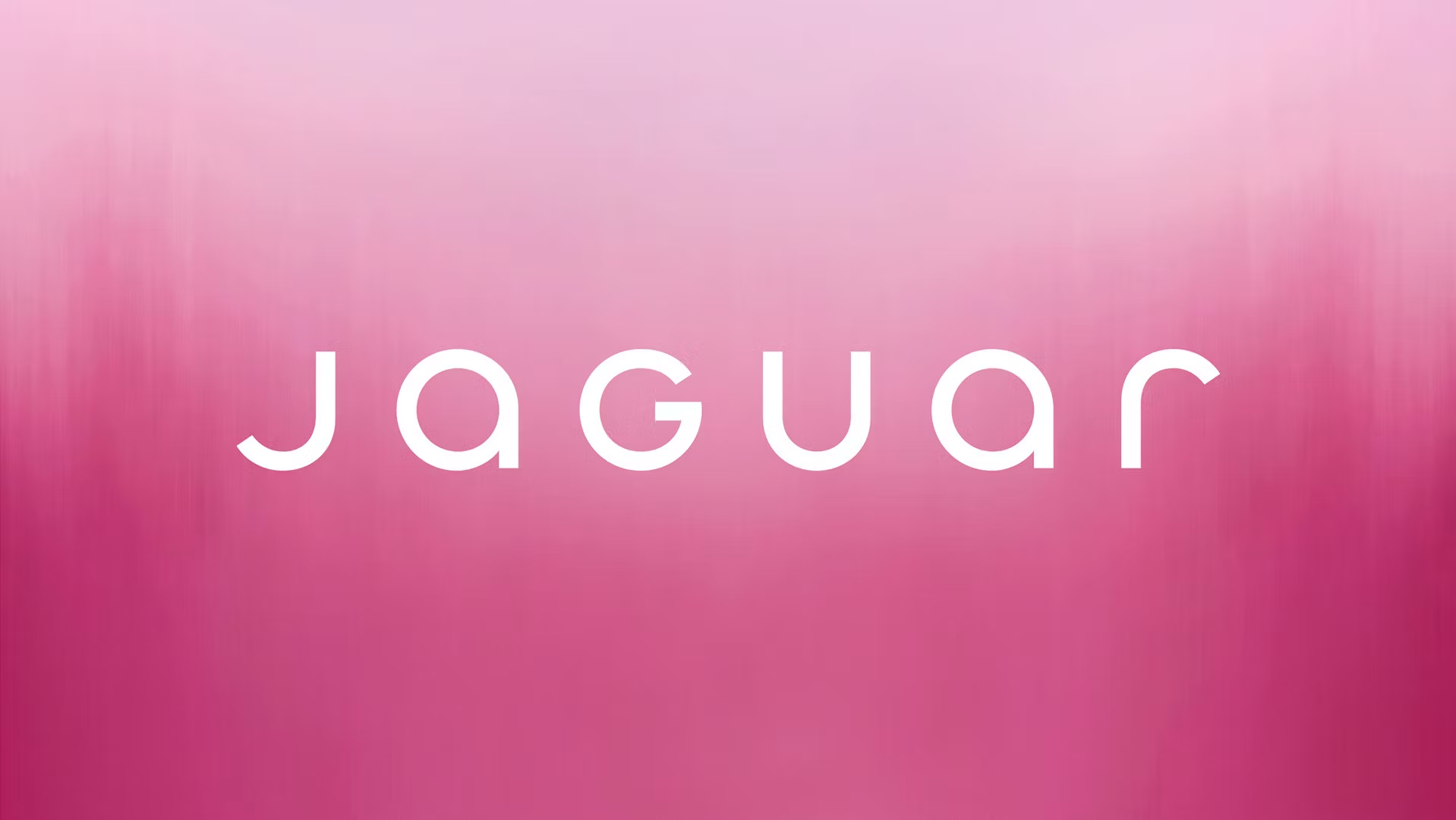
the new jaguar: sitting with you, not above you.
The redesigned logo features a mix of upper and lowercase letters, creating a unique visual harmony. Gone are the muted tones, replaced by vibrant primary colors that exude energy and creativity. The brand’s new tagline, “Live vivid,” encapsulates its commitment to boldness and originality that completely breaks away from the tradition of luxury branding. By showcasing models of diverse ages, races, genders, and ethnicities, including LGBTQ+ representation and challenging traditional gender norms, Jaguar is sending a clear message of inclusivity and acceptance. This rebranding effort goes beyond mere visual changes. It represents a fundamental shift in Jaguar’s target audience, moving away from the traditional focus on affluent older men to a more diverse, “design-minded” demographic. Coupled with the transition to an all-electric luxury car brand, Jaguar is aligning itself with growing global concerns about sustainability and environmental consciousness.
"woke" isn't a dirty word.
Jaguar’s new rebrand has been called “woke” as if it’s the worst thing someone can be. But every generation was built on their own version of “woke” – you might have called them “hippies” or “punks.” Looking back in history, they’re the ones we remember as bringers of much-needed change. The fact alone that Jaguar felt the pressure to do this huge rebrand is proof enough that “wokeness” is winning. It’s a testament to values of inclusivity and respect gaining ground during a time of intolerance, political instability, and division.
Yes, Jaguar’s rebrand is polarizing. Yes, it’s causing controversy. But that’s precisely why we love it. It’s a bold statement in a world that desperately needs shaking up. It’s proof that even the most established institutions can – and should – evolve. In the face of “vile hatred and intolerance”, Jaguar is standing firm, championing a future that’s more inclusive, more dynamic, and infinitely more exciting.
Jaguar’s rebrand is good news for the world.